
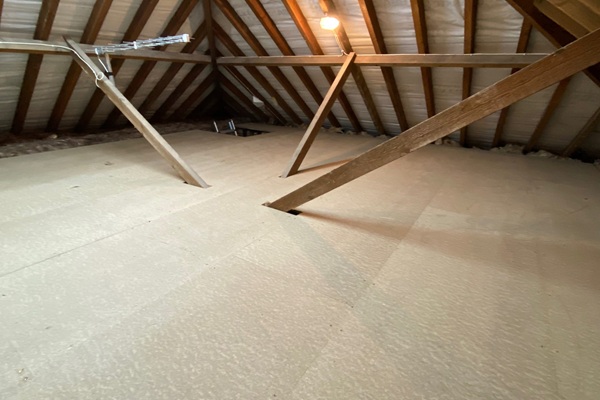
Most people do not have a proper way of accessing the loft at home. They end up dragging a chair onto the landing, holding a torch between their teeth and reaching for the hatch. It sure works, until one day it doesn’t. Getting into the loft safely is the first step to using it properly. This matters just as much as the space itself. So, anyone thinking about loft boarding in Hythe should start there, because boards are no use if reaching the space is a hassle itself.
Hatch and Ladder: What Each One Does
The two often get mixed up, though they are much different.
A loft hatch is the opening in the ceiling and the door that covers it. A good one opens easily, closes snugly, and keeps warm air from escaping into the roof space. Older hatches tend to be small, stiff, or even badly installed. This results in draughts and awkward squeezing.
A loft ladder, on the other hand, is the way up. Some fold in sections, some slide along a track, and others extend like a telescope. All of these tuck away into the loft when not in need. When installed right, these stay steady under people’s weight, while the one that isn’t perfect wobbles or even catches on the way down.
How To Choose What Suits Your Home
There’s no single right answer to this. However, a few honest questions can help you find the right option for your home.
How often will you go up?
Do you plan on using the loft once a year for decorations, or will you need to make weekly trips for storage? Frequent use makes a proper ladder worth having.
What will you carry?
If you plan on carrying suitcases, boxes, and more items, you would need a wide, easy opening and a good ladder. If the items are heavy, a hard rail also helps.
How much room is there?
A ladder needs space on the landing to unfold. In fact, you’d need a proper angle for added safety.
Does the loft have extra insulation?
Deeper insulation can change what is needed and may call for a raised platform. This, in turn, affects the ladder length and hatch position.
If you are planning loft boarding in Hythe, think about where the boards will sit in relation to the opening, so you can step off the ladder onto a safe, flat surface and not a bare joist.
Safety and Fitting: Getting the Details Right
Never climb on a chair or a stack of boxes. It is the most common way people get hurt in the home loft. As for ladders, always check the weight rating on it. Remember that it must cover you plus whatever you are carrying. Ladders built to a recognised safety standard are the better choice.
Always carry things up in stages. Go up with free hands. Also, make sure that there’s light. A loft light switch from the landing helps you see what you are doing, and it makes the loft far more pleasant to use.
Lastly, pay attention to the fitting. A hatch opening may need adjusting. However, cutting/ altering the timbers without professional advice can weaken the roof structure. A competent installer can assess the opening, secure the ladder properly to the frame, and make sure the hatch seals well.
Key Takeaway
To put it simply, a loft can only be useful when you can access it properly. While a proper and well-fitted hatch keeps the house warm, a sturdy ladder keeps people accessing the space safe. This way, the two together turn an otherwise dreaded chore into a simple trip upstairs. So, for anyone considering loft boarding in Hythe, fixing the access first makes sense. The rest automatically becomes easier.
L.W. Lofts is an independent loft access and storage specialist. We know how to turn a dusty, awkward loft into a safe and usable space. Our range covers loft ladders, hatches, loft boarding, loft storage, and thermal surveys. As a Loft Leg recommended installer, we fit raised storage platforms, ideal for new builds and homes with extra insulation.
Connect with us for a free, no-obligation quote.